Scenario details
9 typical problems in B2B sales management
These problems often appear in complex sales teams: unclear customer priorities, hard-to-judge real vs. fake opportunities, vague follow-up actions, and a Pipeline that looks good but carries high risk. Each scenario starts from the current optimization step, explaining what materials and rules can be organized first, and which judgments must be confirmed by a human.
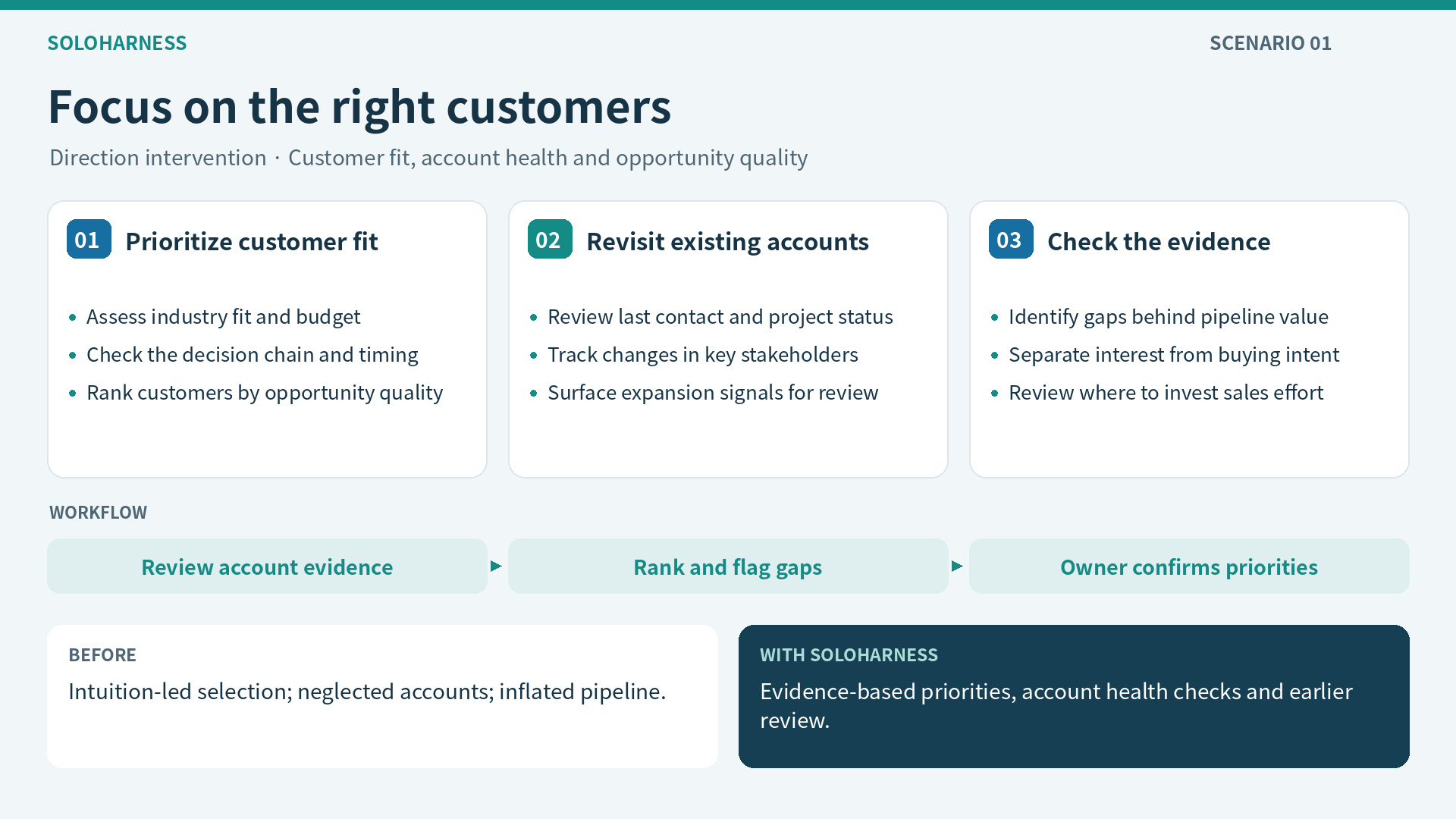
Direction Intervention · Is the Customer Worth Pursuing
Sales pick customers by gut feel, no one manages existing customers, and false prosperity masks structural problems. ICP scoring and dynamic ranking can help prioritize, with owners deciding how to allocate resources.
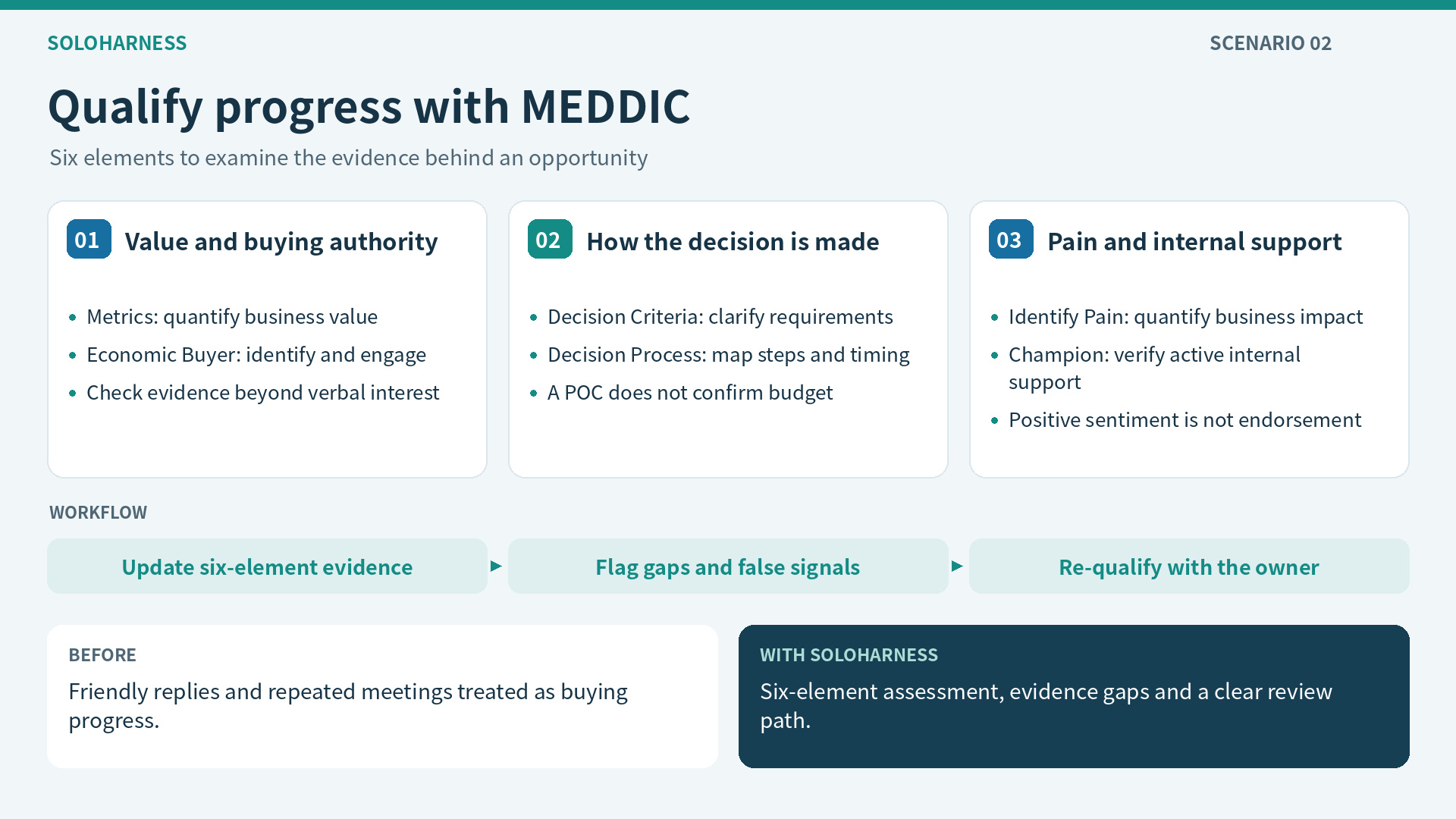
Progress quality intervention · MEDDIC six-element assessment
Is the opportunity real? Someone saying they're "interested" doesn't mean they'll buy. Continuously record the six MEDDIC elements, identify possible false signals, and provide a basis for qualifying.
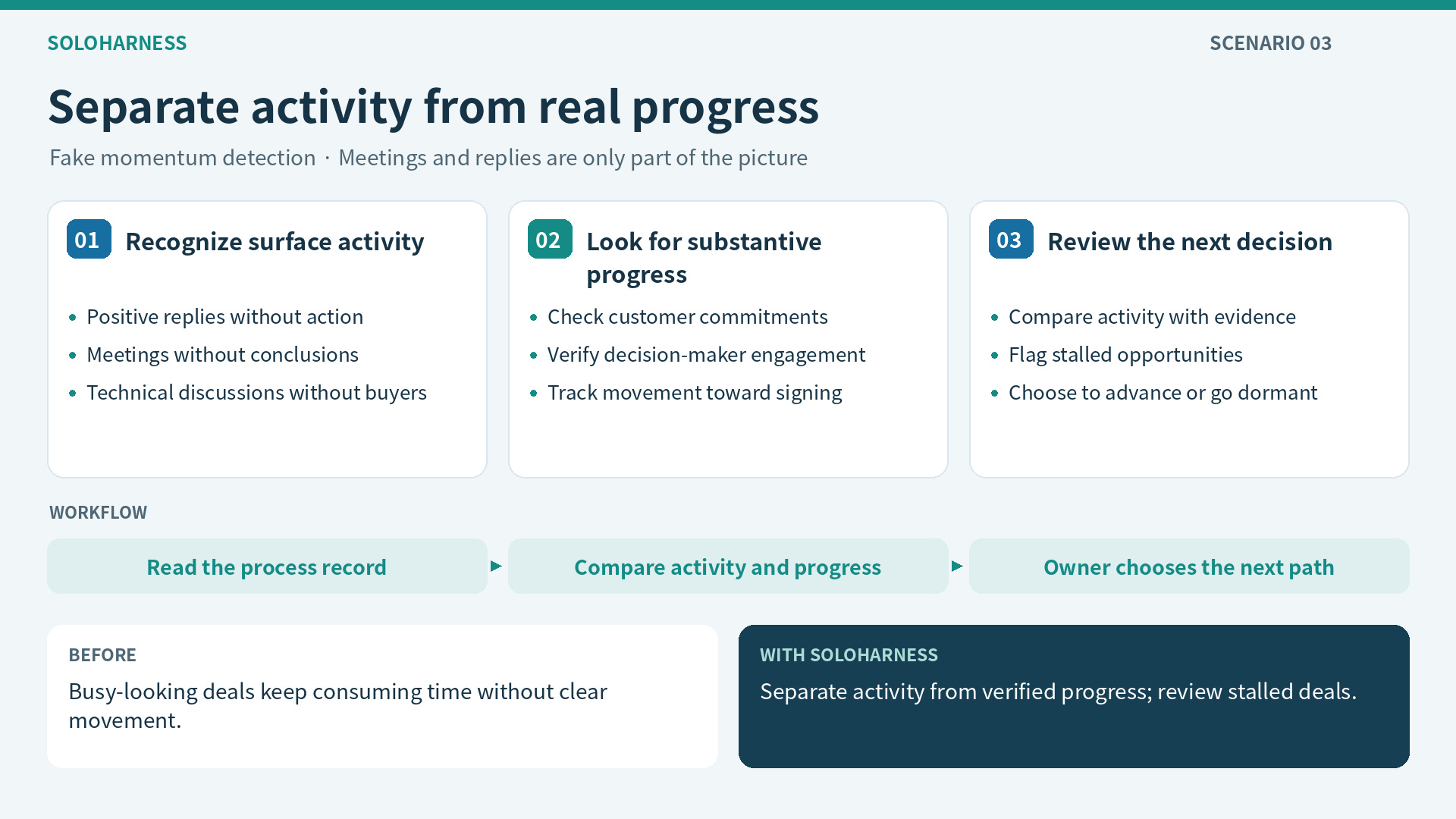
Fake progress detection · Surface heat vs. real progress
Many meetings but no decision-maker, positive email replies but no progress, and the competitor has already signed while the sales rep is still in the dark. The key is to separate surface-level heat from actual advancement actions that have occurred.
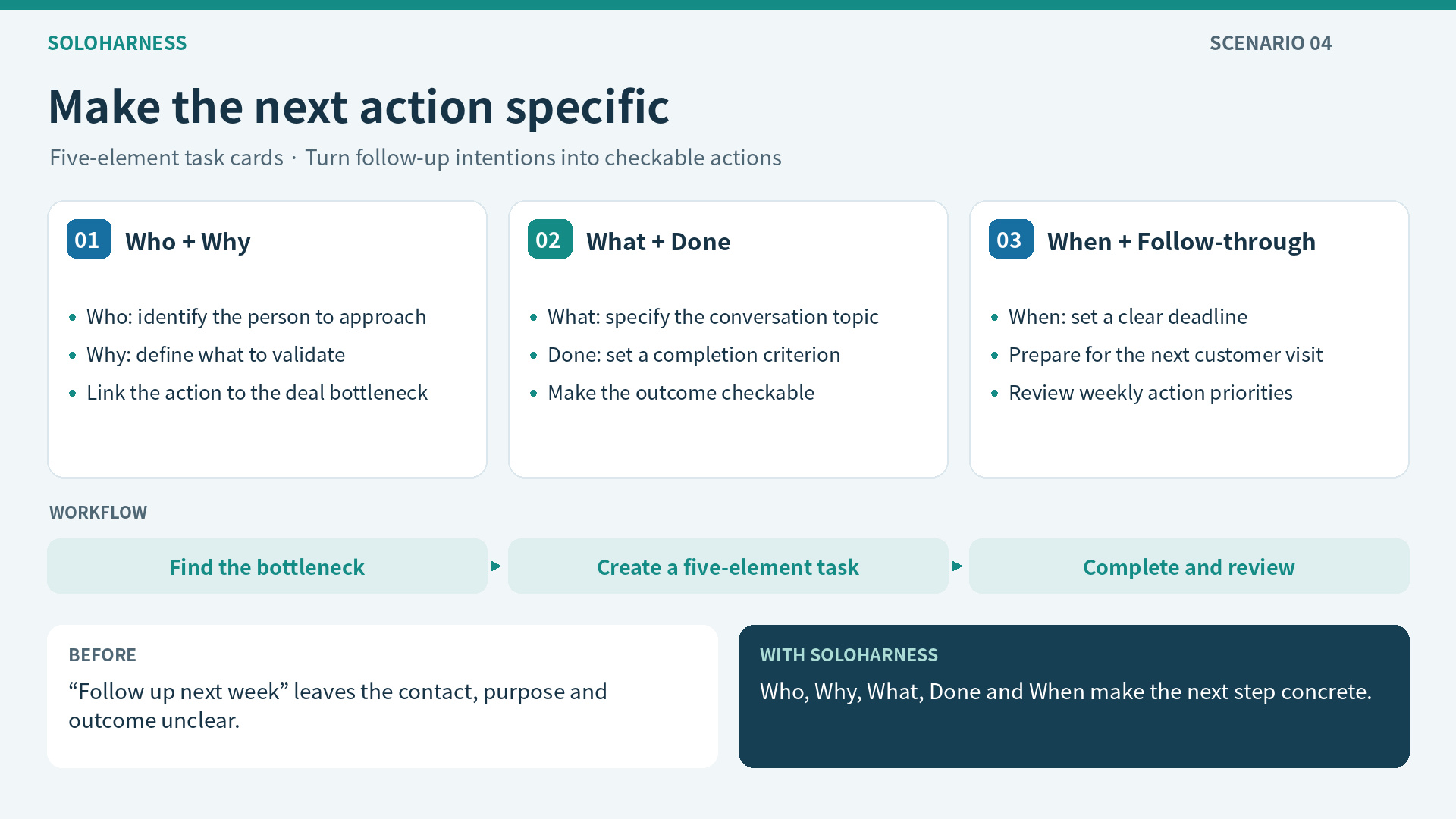
Next Action · Five-Element Precise Action
A salesperson says "I'll contact him next week," and three weeks later nothing has changed. Follow-up actions need to become concrete actions with an object, a purpose, content, a standard and a deadline.
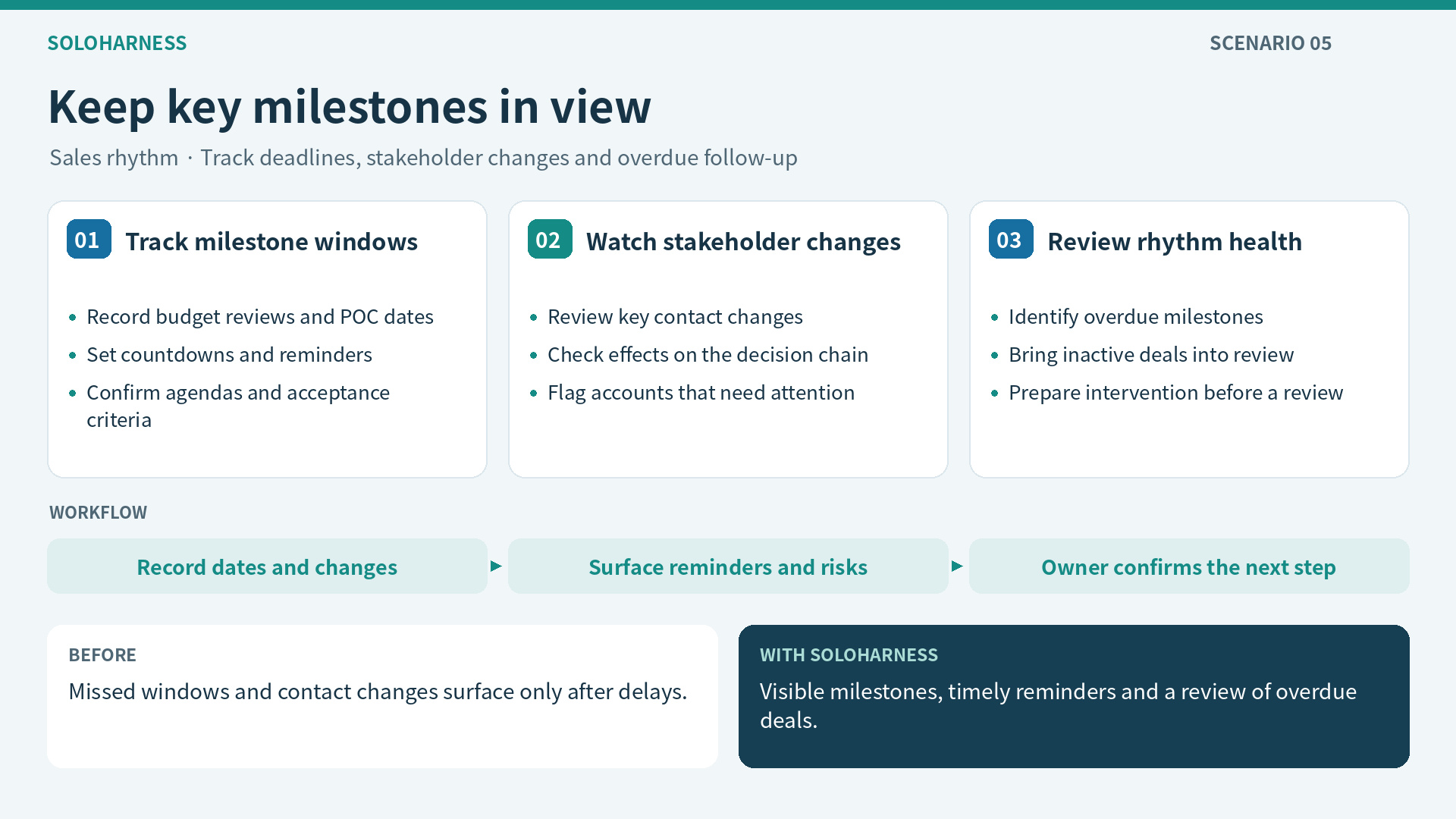
Pace intervention · countdown to key milestones
Sales only remember to reach out when the month-end budget review meeting is near, they don't know the customer's key person changed roles 6 months ago, and many deals die from "no one managing the rhythm." Key milestones need someone to see them in advance and arrange actions.
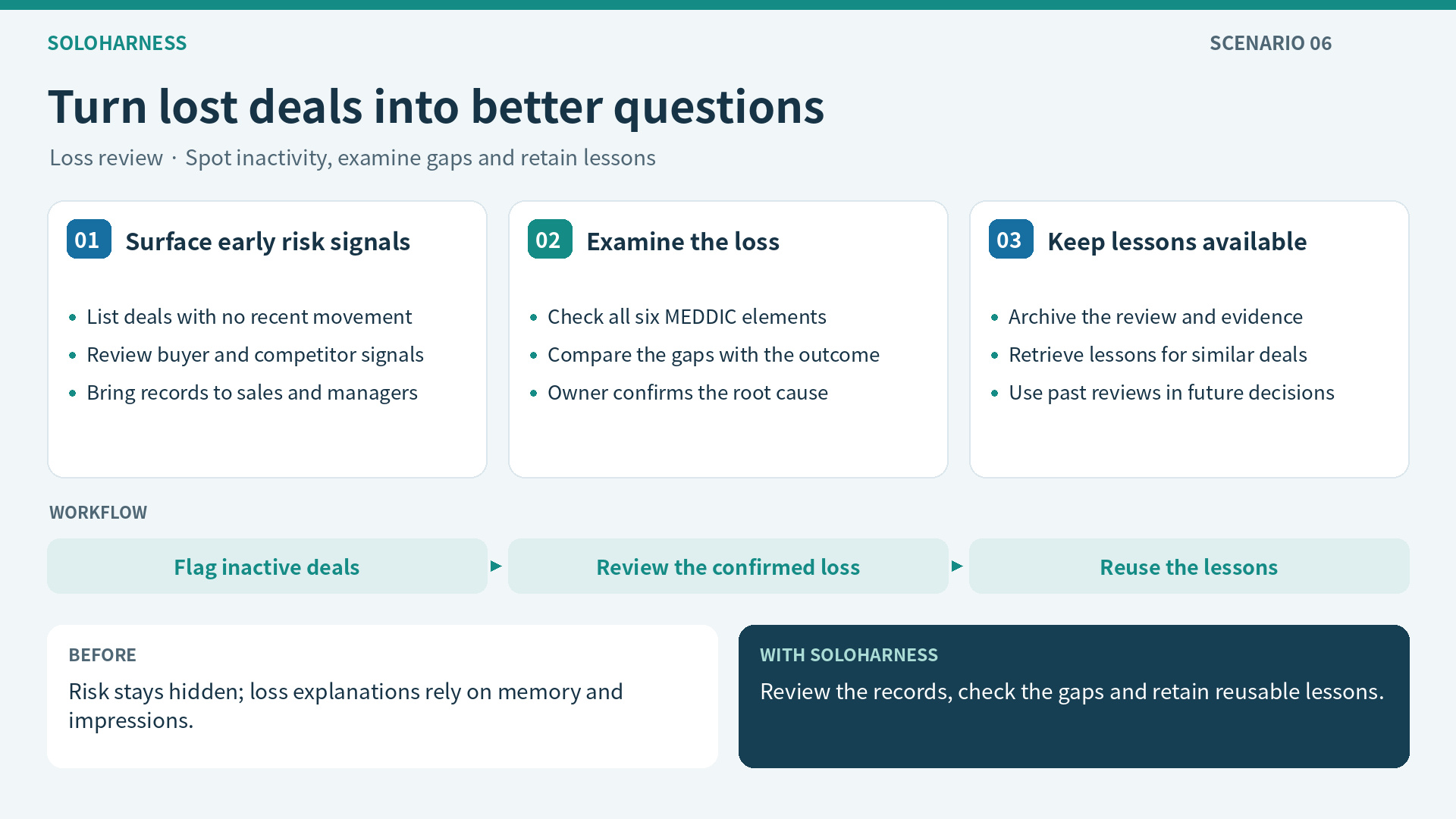
Lost-deal warning · Root cause analysis and lessons learned
A deal is clearly about to be lost but the rep still says "we're still talking," and the manager only finds out when the customer says "we chose someone else." Stalled and inactive signals should surface much earlier.
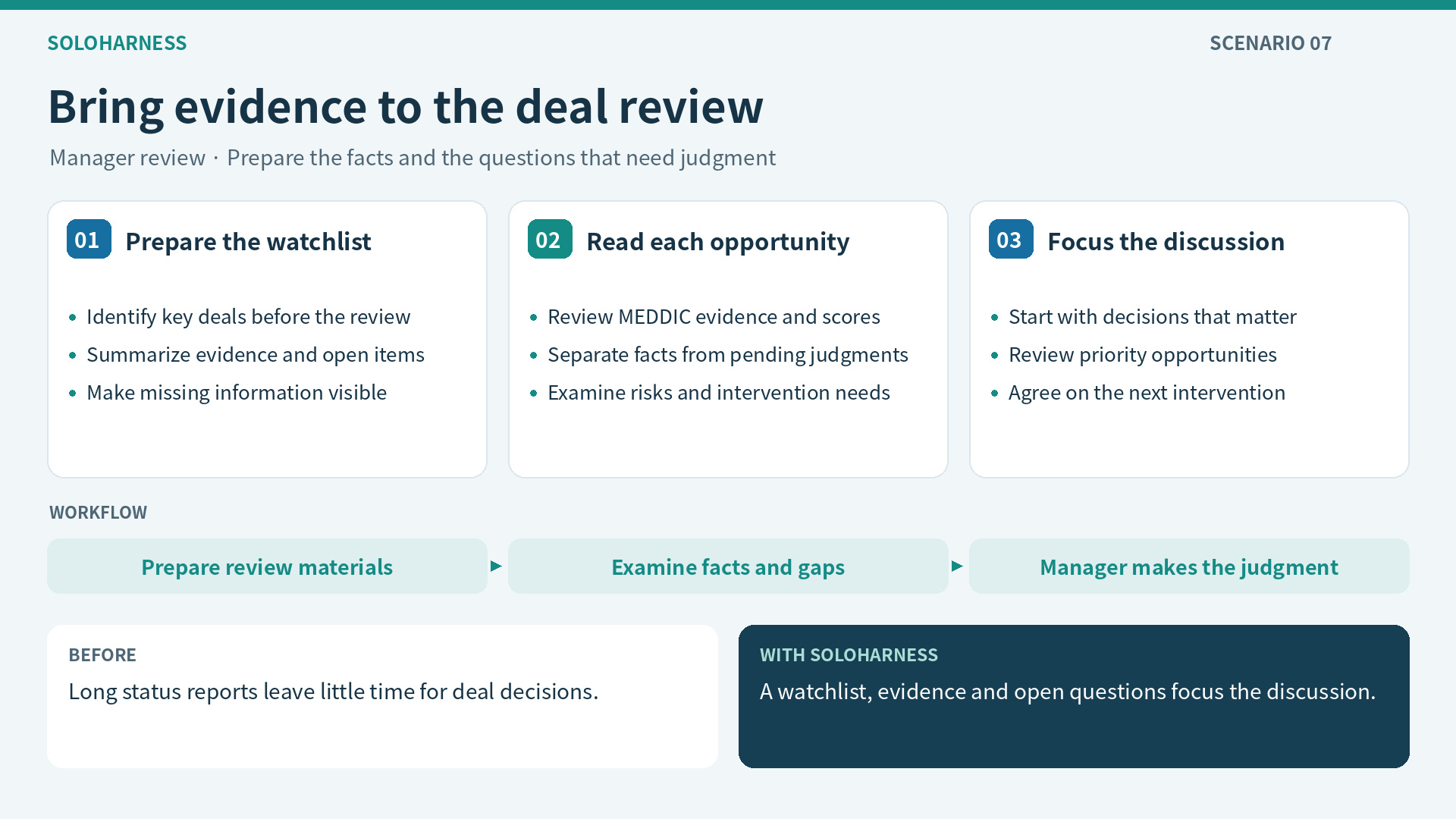
Manager Review · First get the review materials in order
In each team review, managers need objective judgments based on process data, not subjective reports filled in by sales reps themselves.
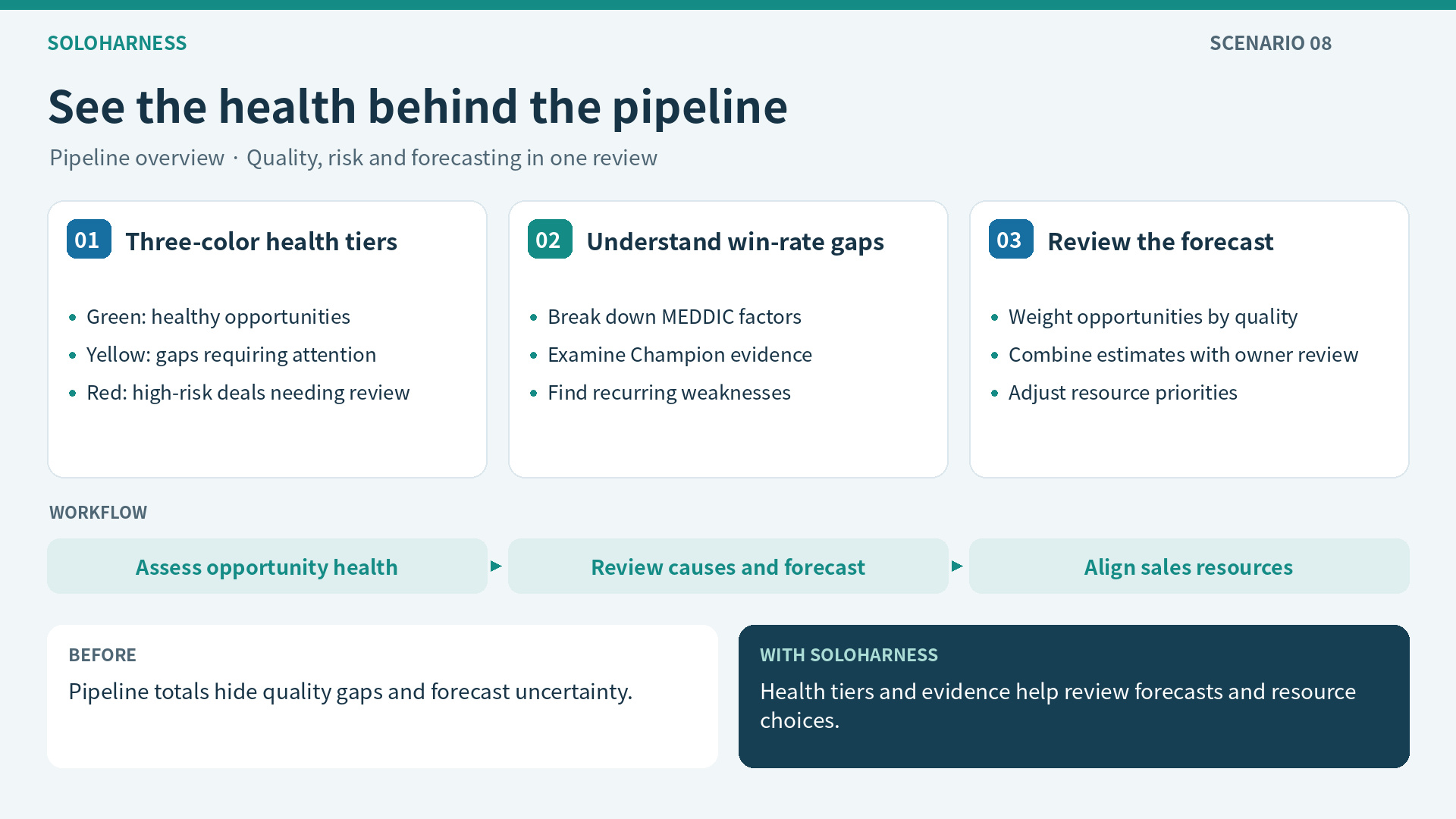
Pipeline overview · Real health monitoring
How many of the "interested prospects" in your pipeline are actually real? The numbers look great on the surface, but by month-end you find out it was all a bubble. Every opportunity needs a health assessment.
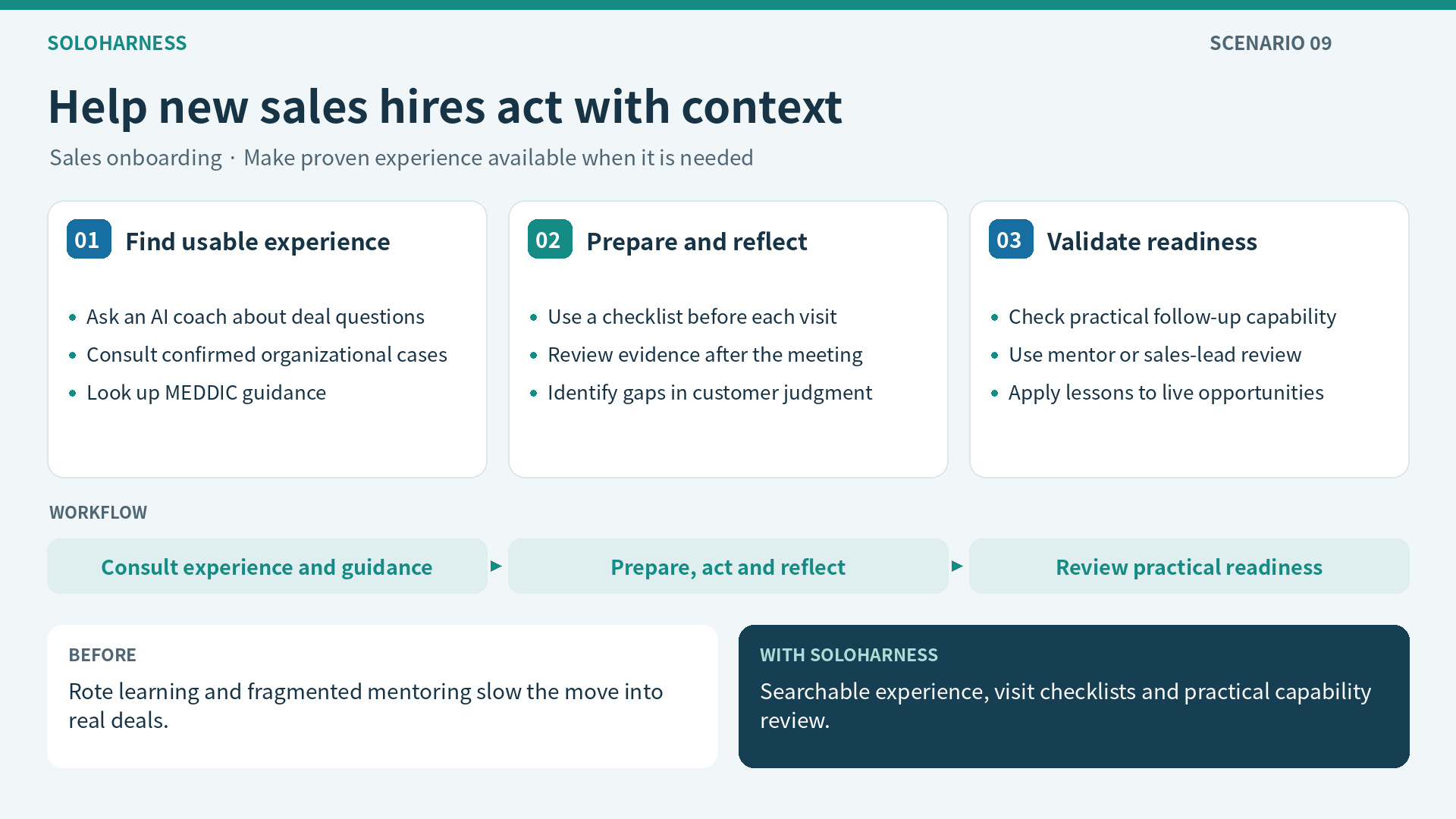
New sales acceleration · From novice to ready to sell
New salespeople ramp up slowly, with a lot to learn in the first 3 months; relying on senior salespeople to mentor them is limited by time and hard to articulate. By documenting the judgment criteria and materials of experienced salespeople, newcomers have a reference starting point.
After reading these scenarios, how many has your team fallen into?
These 9 scenarios are not exhaustive, but they cover most common root causes of sales management failure. First see which category your team is stuck in, then decide which one is worth addressing first.